Financial Wellness Matters
Support Your Workforce's Financial Stability
Why it matters
The Real Problem Behind Turnover
Financial stress doesn't just hurt employees—it directly impacts your workforce stability and operational performance. When workers are financially unstable, it shows up in attendance, engagement, and retention.



The Reality
Why Earned Wage Access Alone Isn't Enough
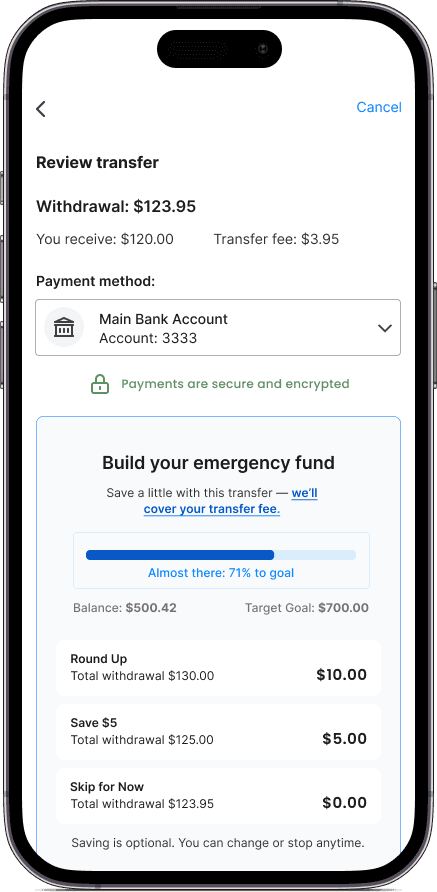
Timing helps — stability requires more.
Our Approach to Financial Wellness
A trust-first model built around how employees actually live and work—not how we wish they would.
Starts With Stability, Not Education
We begin with reliable earned wage access - because you can't build savings when you're in crisis mode. EWA eliminates the immediate cash flow stress that prevents workers from thinking about tomorrow.
Earn Trust Before Expanding Features
Unlike platforms that overwhelm users with features, we unlock tools sequentially. Users experience stability through EWA, then we offer bite-sized prompts, insights, and saving and planning tools - but only after proving value first.
Automate, Don't Rely on Willpower Solely
Our behavioral finance research shows defaults and prompts outperform education for time-constrained workers. We use the moment of need (EWA transaction) to help users build savings automatically, rather than relying on them to initiate savings.
Provide Weekly Cash Flow Support, Not Monthly Budgets
We provide weekly cash flow visibility and planning tools designed for paycheck-to-paycheck reality - not idealized monthly budgets that don't match how your workers actually live.
Build Financial Resilience, Not Just Access
Our goal is to help workers break the patterns that keep them reliant on early wage access. We track the metrics that matter: growing savings balances, declining EWA frequency, reduced self-reported stress, improved attendance, and deeper engagement with planning tools. When these indicators move, you'll know your workforce is becoming more financially resilient - not just accessing the same paycheck earlier.

OUr differientated approach